Preparing 340B Hospitals for the 2026 Rebate Shift
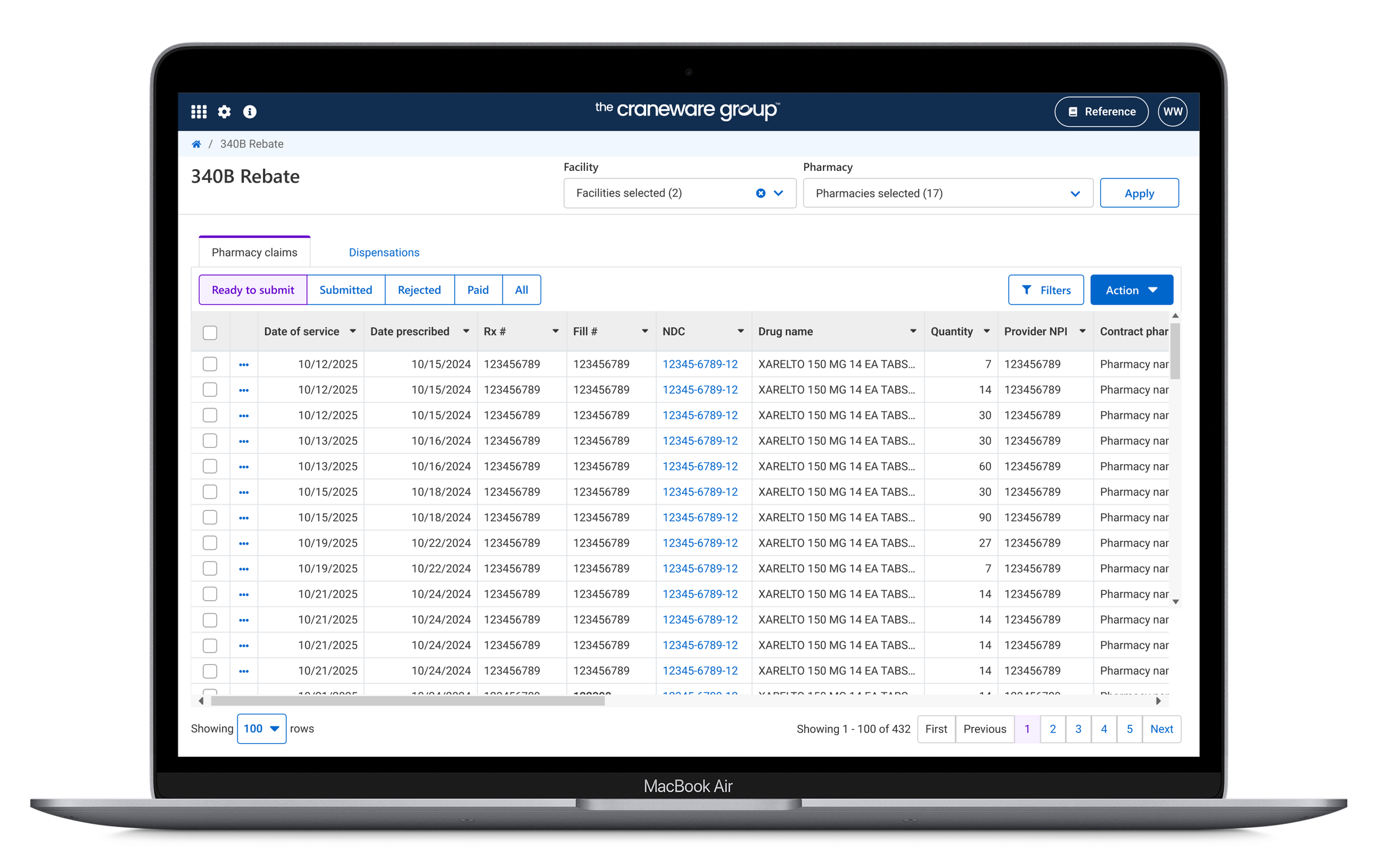
Designing for confidence and continuity during the biggest regulatory shift in decades.
Role: Lead UX Designer
Collaboration: Product Management, Development, and UX team
Goal: Prepare 340B customers for a major, high-risk regulatory change
Product: Trisus 340B Rebate,
Timeline: 6 weeks
As lead designer, I was responsible for creating the end-to-end experience to help users make this shift with confidence.
The Challenge: A High-Stakes New Process
Beginning January 1, 2026, Covered Entities (hospitals) will no longer receive upfront discounts for 10 major drugs, and are required to purchase them at full price and submit rebates for reimbursement. This wasn't just another way to receive a discount; it was a fundamental shift in how hospitals managed their cash flow and compliance.
340B in a nutshell
The 340B Drug Pricing Program is a federal initiative requiring drug manufacturers to sell drugs at significantly reduced prices to eligible safety-net healthcare providers (like hospitals serving a large percentage of low-income patients) so they can stretch limited resources to offer services like free care, vaccines, and community health programs.
Problem 1: The "Guesswork" of Eligibility
The Issue:
Our customers are struggling to understand the complex new rebate rules, and had low confidence in which claims would actually result in a rebate.
The Solution: Automated Eligibility Logic
Instead of forcing users to manually vet claims against new criteria, we integrated existing claim eligibility logic, combined with the new rebate rules, directly into our existing claim engine.
What I designed: A "Pre-Vetted" claim view.
The Result: Users only see claims our system believes will pass. This removed the manual research phase and replaced uncertainty with financial predictability.
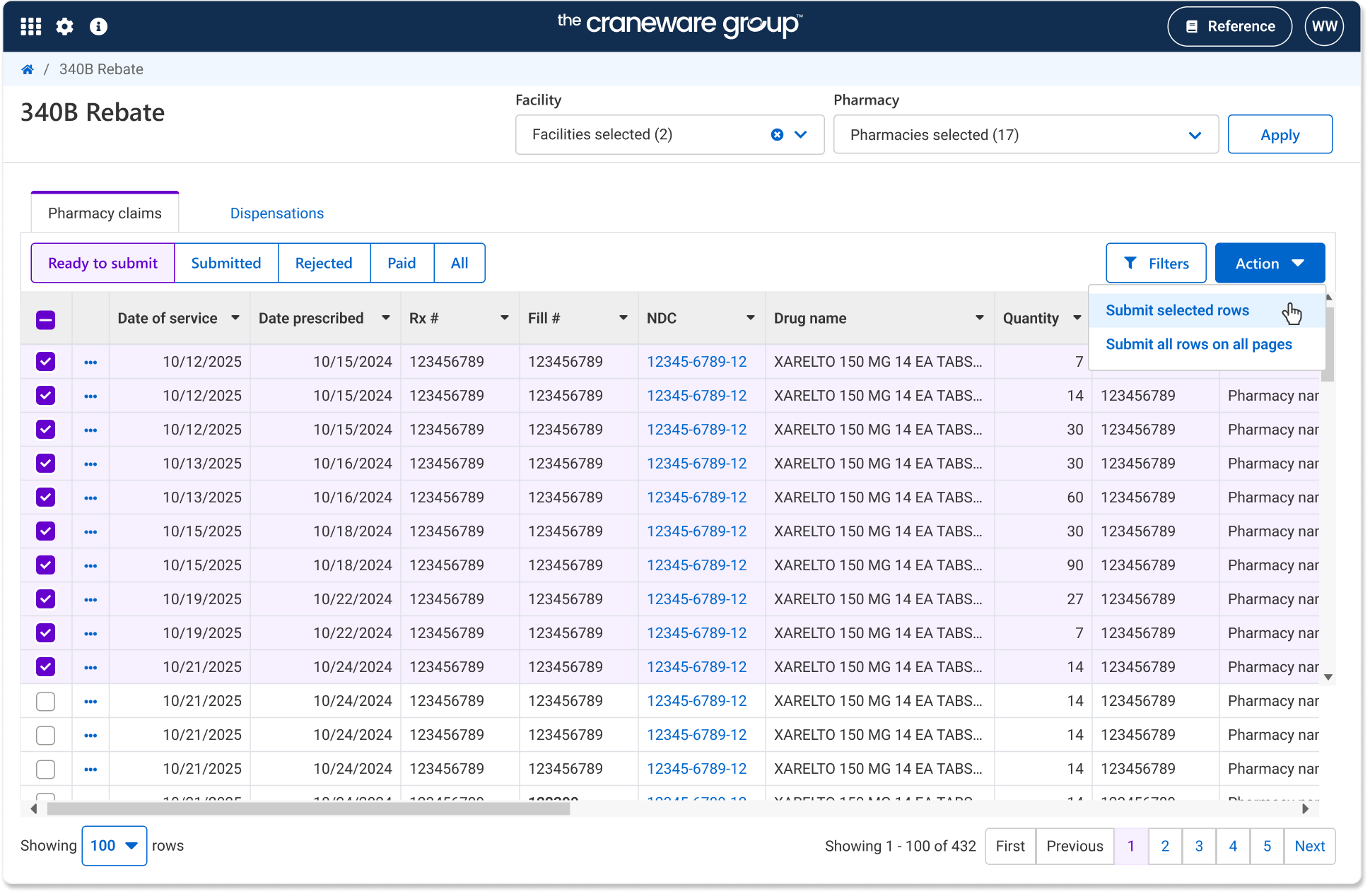
The “Ready to submit” tab shows all eligible claims that have yet to be submitted for a rebate.
From the “Action” button, users can submit selected claims, or easily submit all available claims.
Problem 2: The Race Against Churn
The Issue:
With the Jan 1 deadline looming, hospitals feared financial ruin. Competitors were already pitching "ready-made" solutions, putting our customer loyalty at risk.
The Solution: The "Proof-of-Readiness" Prototype
I led a rapid, iterative design process, working in lockstep with Engineering to ensure every feature in my Figma prototype was technically feasible for a Day 1 launch.
What I designed: A high-fidelity, end-to-end prototype used by Product and Client Specialists in "Roadshow" meetings.
The Result: We got the solution in front of users early. By visualizing the "how," we calmed fears and retained 100% of at-risk clients, not a single customer moved to a competitor.
Problem 1: The Zero-Onboarding Requirement
The Issue:
Hospitals didn't have time for a 2-week training course; they needed to use the tool Day 1 with zero errors and minimal support calls.
The Solution: Familiarity as a Feature
I leveraged existing design patterns from the Trisus ecosystem that users were comfortable with.

What I designed: A UI that mirrored the current workflow of non-rebate drugs, simply adding the "Rebate Status" as a natural extension of their daily routine.
The Result: User feedback from early prototype sessions validated that the workflow was intuitive. This reduced the projected load on Customer Support and required only a short automated pop-up walkthrough.
Impact
Despite a preliminary injunction in late December 2025 pausing the program, the design phase was a resounding business success.
Retention & Growth: We achieved 100% customer retention and successfully acquired new clients fueled by the enthusiasm for our prototype functionality.
Strategic Alignment: The prototype served as the "Source of Truth" for Product and Engineering, and significantly reduced development time by clarifying complex interactions before coding began.
Readiness: The Trisus 340B Rebate platform is fully developed and ready for immediate deployment upon the program’s return.
Key Takeaway:
In high-risk regulatory environments, UX isn't just about "ease of use," it’s about building trust through transparency and technical feasibility.
Future Roadmap
Once the program is reinstated, I have identified two key areas for evolution:
Auto-Submit: A "set it and forget it" to automate this process further reducing admin burden.
One-Click Appeals: An integrated workflow to challenge rejected or underpaid claims from manufacturers directly within the platform.